Bates Numbering Best Practices for Organized Document Review
Imagine this, a litigation team is three weeks into a massive discovery process. They have 12,000 documents spread across five custodians, two law firms, and a shared review platform. Then someone notices it. A numbering conflict. Two completely different documents share the same identifier.
What follows is not pretty. Hours of re-review, emergency calls with opposing counsel, a production delay, and a senior partner who is very, very unhappy.
The fix would have cost nothing. A proper Bates numbering convention, set up before the first document was ever stamped, would have prevented the whole mess.
Bates numbering has been the backbone of legal document management for over a century. It is not glamorous. Nobody brags about their numbering system at a bar association dinner. But get it wrong, and you will definitely be talking about it.
This guide covers exactly how to get it right, from understanding the Bates numbering system and choosing the right software to the specific best practices that separate organized, defensible productions from chaotic ones.
What Is Bates Numbering and Why It Still Matters in 2026
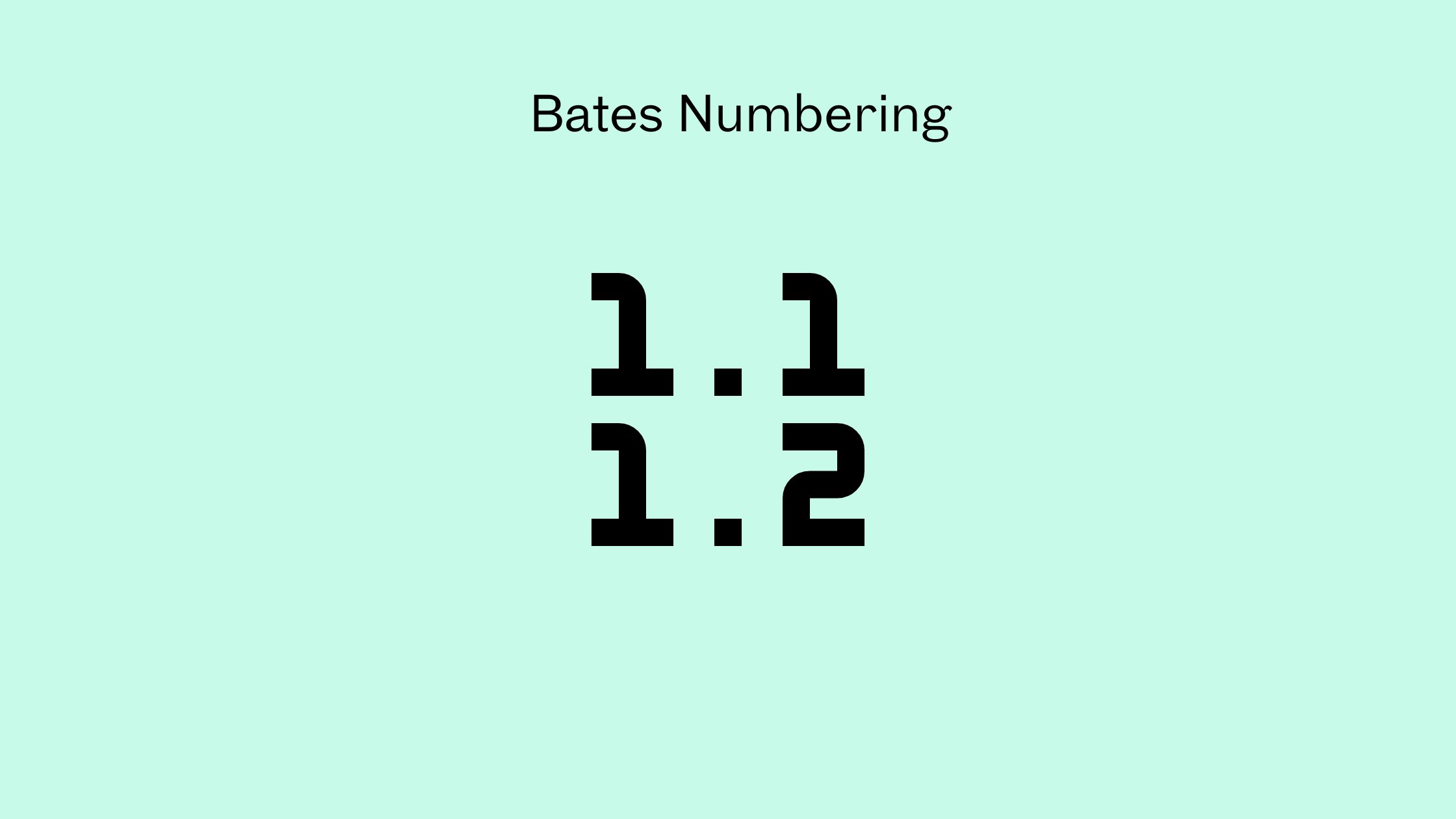
Bates numbering is a method of applying a unique, sequential identifier to each page of a document set. It sounds simple because the concept is simple. The execution, however, is where things get interesting.
Each page in a production receives a number that never repeats and never changes. That number becomes the permanent address of that page. Whether you are referencing a document in a deposition, a court filing, or a review session three years later, the Bates number is how everyone finds it again.
The system is used across legal discovery, regulatory compliance, government records productions, insurance claims management, and increasingly, corporate M&A due diligence. Any workflow involving large volumes of documents that need to be tracked, cited, and retrieved relies on some version of this approach.
Also read: Is LifeLock Worth It
From the Bates Numbering Machine to AI-Powered Stamping
The original Bates numbering machine was patented by inventor Edwin G. Bates in the late 1800s. It was a rubber stamp device that automatically advanced its number counter with each press. Stamp a page, get “0001.” Press again, get “0002.” Revolutionary for its time.
Today, the mechanical stamp has mostly given way to Bates numbering software built into eDiscovery platforms, PDF tools, and document review systems. The concept is exactly the same. The scale is wildly different. Modern tools can stamp tens of thousands of pages in minutes, apply custom prefixes and suffixes automatically, and generate audit logs that would have taken a paralegal a week to produce by hand.
The AI-assisted stamping tools emerging in 2026 go a step further. Some platforms now auto-assign Bates ranges per custodian, flag sequencing gaps in real time, and integrate numbering directly into document review workflows without manual intervention.
Bates Stamping vs. Bates Numbering: Same Thing, Different Era
You will hear both terms used interchangeably. Technically, “bates stamping” refers to the physical process using a mechanical stamp, while “Bates numbering” refers to the broader practice of assigning sequential identifiers to documents. In practice, courts and legal teams treat them as the same thing.
The terminology you use matters far less than the consistency of what you produce. Pick one term for your internal documentation and stick with it.
The Bates Numbering System: Core Components You Need to Understand
Every Bates number has three structural parts: a prefix, the sequential number itself, and sometimes a suffix. Most people focus on the number and ignore the other two. That is a mistake.
Prefix, Number, Suffix: What Each Part Actually Does
The prefix is the set of characters that appears before the sequential number. It typically encodes identifying information about the case, client, or producing party. For example, SMITH_LIT_000001 tells you immediately that this document belongs to the Smith litigation. Without a prefix, you have a number that means nothing outside of its original context.
The core number is the sequential identifier. It should be zero-padded to a consistent length so documents sort correctly in any system. 000001 and 000002 will always sort before 000010. Without zero-padding, you end up with chaotic sort orders where 10 appears before 2.
The suffix is less commonly used but valuable for large, multi-document productions. A suffix can indicate a document type, production batch, or exhibit category. For instance, SMITH_LIT_000001_EXH could flag a document as part of the exhibit set.
Digit Planning: The Most Underrated Decision in Document Production
Here is a mistake that happens constantly. A team starts a matter, estimates they will produce around 3,000 documents, and designs a Bates format with five digits: 00001 to 99999. Fine, right?
Then the case expands. More custodians are added. A second production is requested. Suddenly you are pushing 120,000 pages and your numbering format cannot accommodate it without breaking the convention you already produced under.
A simple rule: design your Bates format to handle at least twice your estimated document volume. If you think you will produce 10,000 pages, build for 25,000. If it is a complex commercial litigation matter, start with eight digits. The cost of over-building is zero. The cost of under-building is a production nightmare.
Also read: Article rewriter by Spellmistake
Placement, Font, and Visibility: The Details That Protect You in Court
Bates numbers need to be readable. That seems obvious until you see a production where the stamp was placed over a key paragraph, or printed in a font so small it is invisible on a printed copy.
Standard placement is the bottom-right or bottom-center of each page. Some jurisdictions have specific preferences, so confirm local rules before you finalize your format. Font size should be large enough to read on both screen and paper. High contrast between the stamp color and the page background is not optional if you expect the document to be used in court.
Consistency across every page in the production is non-negotiable. Same font. Same size. Same location. Same color. One document that deviates from the rest is a chain-of-custody question waiting to happen.
Bates Numbering Best Practices That Prevent the Mistakes That Cost Real Money
This is the section that earns its place. These are the conventions that experienced litigation support professionals use, often without writing them down anywhere. Now they are written down.
Establish Your Numbering Convention Before a Single Document Is Stamped
Before production begins, document your Bates convention in writing. This means defining:
- The prefix format and what each element represents
- The digit count and zero-padding standard
- Whether suffixes will be used and what they encode
- Where on the page the number appears
- Which platform or tool will apply the numbering
Put this in a case management SOP or even a simple shared document. The goal is that any person on the team can pick up the convention and continue it without asking questions.
Starting production before this is settled is how you end up with three different formats across three different batches, which then requires reconciliation work that should never have existed.
Use Unique Bates Ranges Per Custodian
Assigning separate number ranges to each custodian is one of those practices that feels like extra work upfront and saves enormous headaches later. Here is a basic structure:
- Custodian A: MATTER_000001 through MATTER_009999
- Custodian B: MATTER_010000 through MATTER_019999
- Custodian C: MATTER_020000 through MATTER_029999
This approach means that if a document later needs to be traced back to its source, the Bates number itself tells you whose files it came from. No cross-referencing required. In multi-party litigation where documents from dozens of custodians are reviewed together, this becomes genuinely invaluable.
Some modern eDiscovery platforms can handle custodian range assignment automatically during processing. If your platform supports this, use it.
Also read: Cnlawblog
Maintain and Audit Your Bates Log Before Every Production
A Bates log is a running record of every range assigned, who it belongs to, when it was produced, and to whom. Think of it as the index for your entire numbering system.
Before each production goes out the door, run a quick audit against the log:
- No gaps in the sequence
- No duplicated ranges
- Prefixes are consistent with prior productions
- The range aligns with what the production cover letter states
This takes less than 15 minutes with good software and about an hour manually. Either way, it is time well spent. A gap in a Bates sequence is the kind of thing opposing counsel notices and raises as a completeness issue. Your Bates log is the evidence that it was not an oversight.
Never Reassign or Overwrite a Bates Number After Production
This one is simple but often violated in moments of panic. If a document was produced under a specific Bates number, that number is permanently attached to that document. It cannot be reassigned to a different document. It cannot be removed and reused.
If you discover an error, the correct approach is to issue a supplemental production with a new Bates range and provide opposing counsel with a corrective notice explaining the change. Courts expect this. What they do not tolerate is a produced document whose identifier has changed between productions with no explanation.
Renumbering after production, however well-intentioned, creates admissibility questions and signals to opposing counsel that your document management process lacks controls.
Choosing the Right Bates Numbering Software in 2026
The tool you use matters. Not all Bates numbering software is built the same, and the wrong choice for your workflow creates friction you will feel on every production.
What to Actually Look for in a Bates Numbering Tool
Ignore the marketing language and focus on these specifics:
- Batch processing capacity: Can it handle your largest anticipated production volume without performance issues?
- Audit trail generation: Does the tool log every stamping action with timestamps and user attribution?
- PDF compatibility: Does it handle scanned documents, native PDFs, and mixed-format files equally well?
- Sequence validation: Does it automatically flag gaps or duplicates during processing?
- Export options: Can you export the Bates log in formats your review platform and co-counsel can actually use?
Integration with your existing review workflow is often more important than any individual feature. A tool that works in isolation but requires manual data entry into your review platform is creating two problems instead of solving one.
Adobe Acrobat vs. Dedicated eDiscovery Platforms
Adobe Acrobat’s built-in Bates numbering function is legitimate and genuinely useful for smaller productions. If you are a solo practitioner or small firm handling matters with a few hundred to a few thousand pages, Acrobat does the job cleanly and without a steep learning curve.
For larger matters, dedicated eDiscovery platforms like Relativity, Everlaw, Nuix, or Logikcull offer Bates numbering as part of a broader document review ecosystem. The numbering integrates directly with review workflows, production sets, and privilege logs. That integration is where the real efficiency gain lives.
The practical question is volume and complexity. Under 500 pages and a single custodian? Acrobat works fine. Over 5,000 pages or multiple custodians? You want a platform built for that scale.
Also read: Instagram Viewer Stealthgram
When a Physical Bates Numbering Stamp Still Has a Role
Physical bates numbering stamps did not entirely disappear with digital workflows. They still show up in small claims proceedings, physical exhibit binders, and some government agency workflows where paper-based record keeping remains the standard.
Self-inking stamps with adjustable digit wheels are still manufactured and used. If your practice includes any physical document production, a manual stamp with a proper tracking log is still a valid approach. The best practices apply equally: unique numbers, consistent placement, no reassignment after the fact.
Some hybrid workflows use physical stamps for exhibits that need to be handled in court while maintaining digital Bates records for the broader production set. In those cases, the key is making sure the physical and digital logs stay synchronized.
Bates Numbering in 2026: Where the Practice Is Going
Legal technology moves slowly compared to consumer tech. Bates numbering is about as old-school as it gets. Yet the contexts in which it is being applied are expanding in ways that would have seemed unusual even five years ago.
Regulatory compliance workflows at large corporations now use Bates-style sequential identifiers for document productions to the SEC, FTC, and in HIPAA-related audits. The logic is the same: regulators need to cite specific documents, and sequential identifiers make that efficient and auditable.
In M&A due diligence, virtual data rooms increasingly apply Bates-style numbering to financial document packages so that deal teams can cite specific materials in correspondence and term sheets without ambiguity.
Legal AI companies building document review and contract analysis tools are using Bates-style identifiers internally for training dataset traceability, ensuring that specific labeled documents can be located and audited within large corpora.
Government agencies handling FOIA responses have widely adopted Bates numbering for public records productions. It creates a clean audit trail for what was released, when, and in what form, which matters enormously in contested FOIA disputes.
The numbering system itself has not changed. The industries that need it have grown.
Conclusion
Bates numbering is one of those practices that gets taken for granted until something goes wrong. At that point, it becomes the most important thing anyone has talked about all week.
The good news is that getting it right is not complicated. A clear convention established before production begins, a consistent numbering system built for the scale of the matter, the right software for your workflow, and a Bates log that gets audited before every production. That is the whole system.
The teams that build these habits rarely think about Bates numbering at all during a case. Everything just works. The teams that skip these steps think about it constantly, usually at the worst possible moments.
Build the system once. Run it consistently. Sleep better during discovery.
Frequently Asked Questions
What is the difference between Bates stamping and Bates numbering?
Bates stamping refers to the original physical practice of using a mechanical stamp to apply sequential numbers to paper documents. Bates numbering is the broader, modern term that includes both physical and digital methods of applying sequential identifiers to pages. They refer to the same underlying concept. Courts and legal teams use both terms interchangeably, and the distinction rarely matters in practice.
How many digits should a Bates number have?
A minimum of six digits is recommended for most matters, which supports numbering up to 999,999 pages. For large commercial litigation or regulatory productions where document volume is uncertain, eight digits is a safer standard. Always use zero-padding so that numbers sort correctly regardless of the system displaying them. Starting with 000001 instead of 1 prevents sort order problems that are surprisingly easy to create and surprisingly painful to fix.
Can Bates numbers be changed after a document is produced?
No. Once a document has been produced with a specific Bates number, that number is permanently tied to that document. Reassigning or altering Bates numbers after production creates chain-of-custody problems and can raise admissibility questions in litigation. If a production error requires correction, the right approach is to issue a supplemental production with a new Bates range and provide a corrective notice to all parties explaining the change.